VLSI-SoC 2026
34th IFIP/IEEE
International Conference
on Very Large Scale Integration SoC
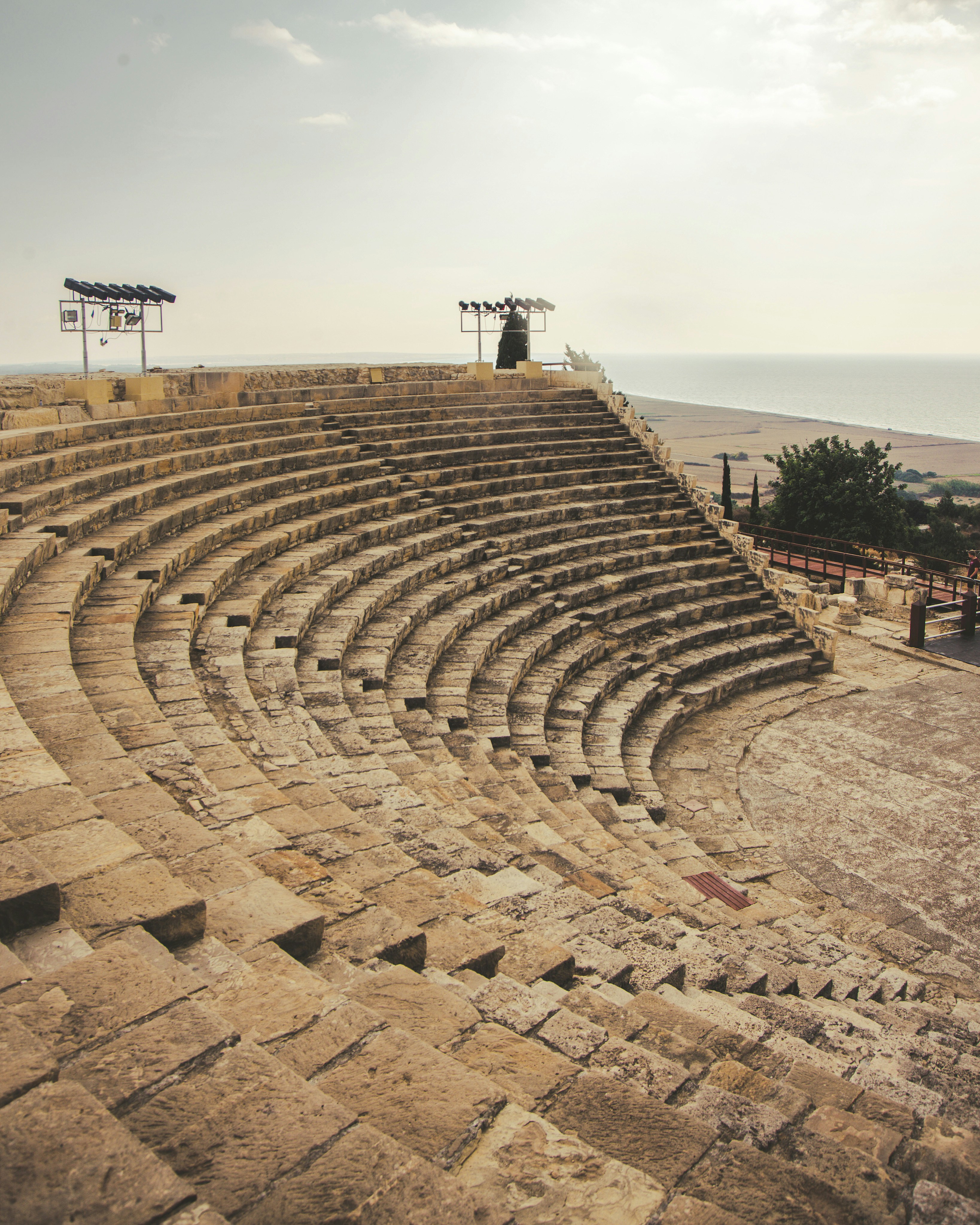
Limassol (Cyprus), 11-14 October, St. Raphael Resort.
34th IFIP/IEEE
International Conference
on Very Large Scale Integration SoC
Limassol (Cyprus), 11-14 October, St. Raphael Resort.










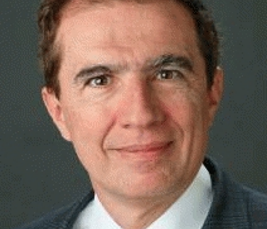
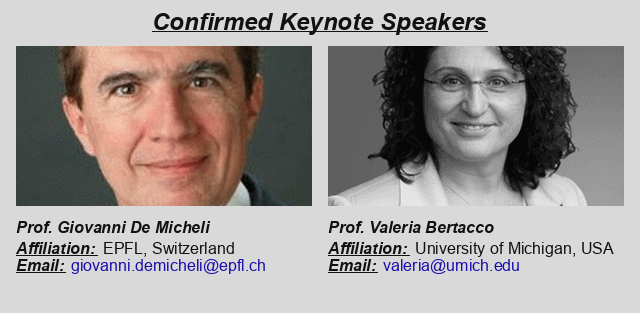
Affiliation: EPFL, Switzerland
Email: giovanni.demicheli@epfl.ch
Website: si2.epfl.ch/~demichel/
Giovanni De Micheli is a research scientist in electronics and computer science. He is credited for the invention of the Network on Chip design automation paradigm and for the creation of algorithms and design tools for Electronic Design Automation (EDA). He is Professor and Director of the Integrated Systems Laboratory and Scientific Director of the EcoCloud center at EPFL Lausanne, Switzerland. Previously, he was Professor of Electrical Engineering at Stanford University. He was Director of the Electrical Engineering Institute at EPFL from 2008 to 2019 and program leader of the Swiss Federal Nano-Tera.ch program. He holds a Nuclear Engineer degree (Politecnico di Milano, 1979), a M.S. and a Ph.D. degree in Electrical Engineering and Computer Science (University of California at Berkeley, 1980 and 1983).
Sustainable and Secure Computing: the Last Frontier
This keynote explores the convergence of sustainability and security in modern computing, highlighting key challenges and emerging approaches for building energy-efficient and resilient systems.

Affiliation: University of Michigan, USA
Email: valeria@umich.edu
Website: web.eecs.umich.edu/~valeria/
Valeria Bertacco is the Mary Lou Dorf Collegiate Professor of Computer Science and Engineering, and Arthur F. Thurnau Professor of Engineering at the University of Michigan. Her research interests are in the area of computer system design. Throughout her career, she has contributed novel solutions in design validation and reliability, hardware-security assurance, and the design of specialized architectures for graph algorithms and machine learning. From 2018 to 2023, Prof. Bertacco was the Director of the Applications Driving Architectures (ADA) Research Center, funded by a consortium of semiconductor companies and the Defense Advanced Research Projects Agency (DARPA). The Center engaged the work of 10 US academic institutions and over 130 Ph.D. student researchers. Currently, she leads the MAVERIC collaborative, the University of Michigan's initiative to advance semiconductor research and education. At Michigan, she also serves as the Vice Provost for Engaged Learning, supporting all international partnerships and co-curricular engagements. In the international space, her initiatives have included promoting collaborations with African institutions, through initiatives like Africa Week, UMAPS and AURA. Domestically, the primary partners reside within the State of Michigan, and especially within the City of Detroit. In her Vice Provost role, Prof. Bertacco facilitates the work of nine central units, whose goals range from promoting environmental sustainability to supporting journalists, to promoting the arts in research universities, and to increasing the participation of gender minorities in STEM fields. She received her M.S. and Ph.D. degrees in Electrical Engineering from Stanford University. Prof. Bertacco joined the University of Michigan in 2003, after working as a research engineer for Systems Science Inc., and Synopsys from 1997 to 2001.
Envisioning SoC Design with an Army of Agentic Minions.
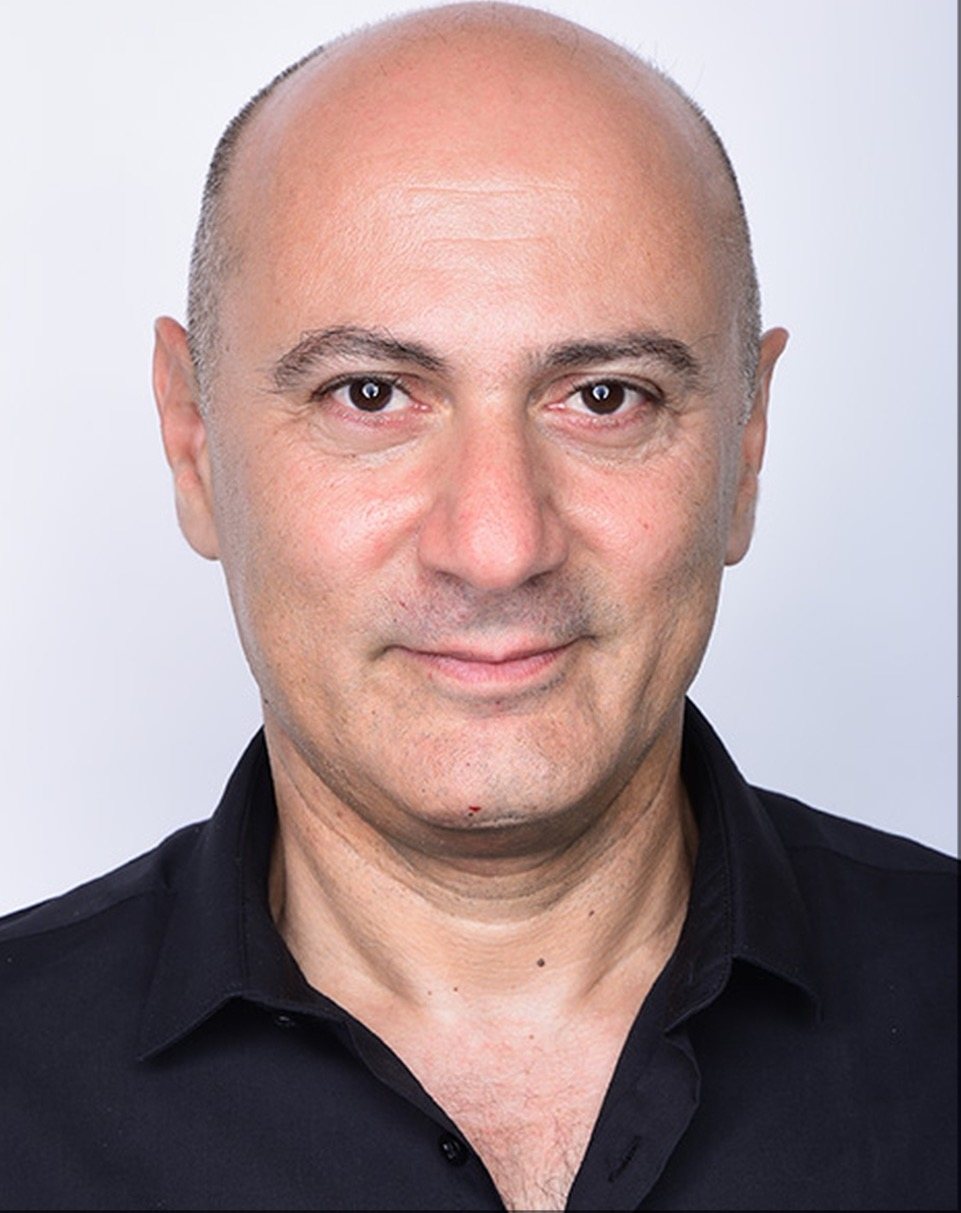
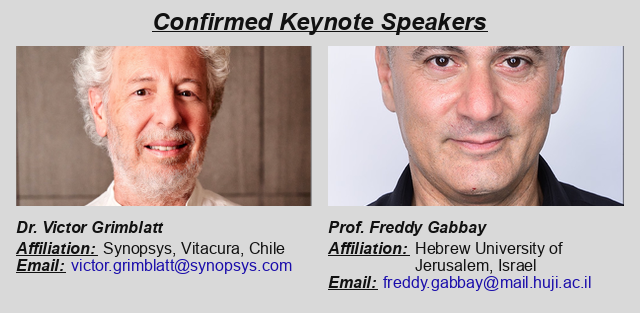
Affiliation: Hebrew University of Jerusalem, Israel
Email: freddy.gabbay@mail.huji.ac.il
Website: freddygabbay.huji.ac.il
Freddy Gabbay is a Professor and head of the VLSI Systems Lab at the Institute of Applied Physics at the Hebrew University of Jerusalem. His research interests span VLSI design, microelectronics, computer architecture, machine learning, and domain-specific accelerators. Throughout his career, Prof. Gabbay has contributed to the design and development of advanced semiconductor systems, combining architectural innovation with practical implementation in high-performance computing and communication devices. Prof. Gabbay's professional experience bridges academia and industry, with over two decades of leadership in both domains. He began his career in 1998 as a researcher at Intel's Microprocessor Research Lab. He then joined Mellanox Technologies, where he played a key role in the architecture and ASIC design of high-performance switching products. In 2003, he moved to Freescale Semiconductor as a senior design manager, leading the development of baseband ASIC solutions. He later returned to Mellanox Technologies (now part of NVIDIA) in 2012, where he served as Vice President of Chip Design, overseeing large-scale silicon development programs. In addition to his industrial leadership, Prof. Gabbay is actively engaged in the academic and professional community. He serves as an Associate Editor for IEEE Computer Architecture Letters and as Chairman of the IEEE Computer Society Israel Chapter. He holds 19 patents and is a Senior Member of IEEE. Prof. Gabbay received his B.Sc., M.Sc., and Ph.D. degrees in Electrical Engineering from the Technion - Israel Institute of Technology.
Do We Really Need All the Bits? Value-Driven Approximate Computing for AI Accelerators
Generative AI is reshaping computing, enabling breakthroughs across language, vision, and autonomous systems. However, these models come at a steep cost: they are increasingly limited by compute, memory bandwidth, and energy, pushing modern hardware systems toward fundamental scalability barriers. This keynote presents a value-driven perspective on approximate computing, leveraging the inherent resiliency of deep neural networks to rethink how AI systems are designed. Instead of treating all data uniformly, we prioritize computation and data movement based on their contribution to model accuracy. This enables aggressive optimizations through quantization, decomposition, dynamic approximation, and compression. We will showcase a set of hardware–software co-designed techniques that significantly reduce memory traffic, improve arithmetic intensity, and enhance overall system efficiency. Through case studies, we demonstrate substantial gains in performance, energy efficiency, and memory utilization, while maintaining high model accuracy. Finally, we discuss how value-driven approximate computing reshapes the design space of next-generation AI accelerators, highlighting the central role of co-design in overcoming the memory and energy bottlenecks of large-scale generative AI systems.

Victor Grimblatt has an engineering diploma in microelectronics from Institut Nationale Polytechniquede Grenoble (INPG - France) and an electronic engineering diploma from Universidad Tecnica Federico Santa Maria (Chile). He got his PhD on Electronics in 2021 from University of Bordeaux. He is currently R&D Executive Director and General Manager of Synopsys Chile. He has published several papers in IoT, EDA, Smart Agriculture, Climate Change, and embedded systems development. From 2012 to 2024 he was chair of the IEEE Chilean join chapter EDS/CASS/SSCS. He has been part of several conferences TCP (ISCAS, ICECS, LASCAS, VLSI SoC) and Steering Committees. He was member of the IEEE CASS Board of Governors for the period 2021 - 2023. He founded the Electronics for Agrifood SIG at CASS and chaired it until 2024. He was Chair of LASCAS Steering Committee from 2018 to2022. He was CASS representative at the IEEE Climate Change TAB. He is member of the IEEE CASS Board of Governors for the period 2025 - 2027.He was President of the Chilean Electronic and Electrical Industry Association (AIE) from 2017 to 2021.From 2006 to 2008 he was member of the “Chilean Offshoring Committee” organized by the Minister of Economy of Chile. In 2010 he was awarded as “Innovator of the Year in Services Export”. In 2022 he was awarded as “IEEE/AIE Best Engineer” in Chile. In 2023 he was awarded as IEEE R9 Outstanding Engineer”. In 2024 he was awarded as “2024 CASS Meritorious Service Award”. Victor's research areas are EDA (Electronic Design Automation), Climate Change, and IoT for Smart Agriculture.
Low Power IC Design for a Sustainable World
In an era where sustainability is essential, designing low-power integrated circuits (ICs) plays a crucial role in reducing energy consumption and mitigating environmental impact. This talk examines innovative strategies in low-power IC design to meet the increasing demand for energy-efficient electronics, from IoT devices to large-scale computing systems. By utilizing advanced techniques such as subthreshold operation, power gating, clock gating, and dynamic voltage scaling, we outline a framework for optimizing performance while minimizing power dissipation. The discussion emphasizes the interplay between circuit-level innovations, such as the strategic use of clock gating to reduce dynamic power in idle states, process technology advancements, and system-level integration, highlighting their collective contribution to sustainability. Through simulations and case studies, we demonstrate how these approaches can significantly lower the carbon footprint of electronic systems, paving the way for greener technology solutions that align with global sustainability goals.

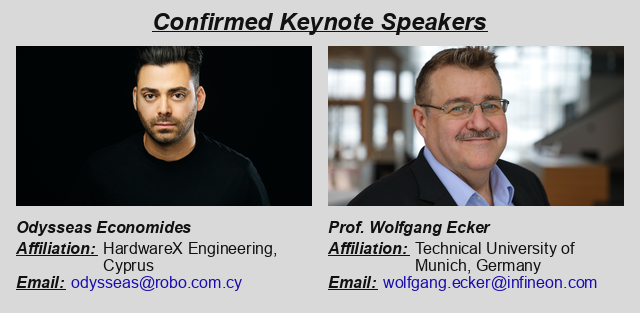
Affiliation: HardwareX Engineering, Cyprus
Email: odysseas@robo.com.cy
Website: www.uclancyprus.ac.cy/academic/odysseas-economides/
Odysseas Economides is a Cypriot electrical engineer and hardware entrepreneur focused on bridging the gap between research and industry through embedded systems, intelligent electronics, and robotics. He is the founder and Managing Director of Robo Educational & Research Robotics and HardwareX Engineering, where he leads the development of low-power electronics, IoT sensing platforms, edge AI systems, and custom embedded products from rapid prototyping through to production-ready deployment. His work spans education, research, and industry, with a strong emphasis on translating innovative ideas into practical, manufacturable hardware solutions. A SEMICON Europa “20 Under 30” awardee and NASA Space Apps People's Choice winner, Odysseas is also active in Cyprus' innovation ecosystem through mentoring, workshops, and STEM initiatives that empower teams to turn ideas into real, working technology.
Bridging the gap between research and industry through embedded systems
This keynote explores how embedded systems enable the translation of research innovations into real-world industrial applications, highlighting challenges and strategies for effective technology transfer.

Affiliation: Technical University of Munich, Germany
Email: wolfgang.ecker@infineon.com
Wolfgang Ecker is Distinguished Engineer at Infineon and Professor at Technical University of Munich. His research and innovation focus lie on digital system modeling, digital design automation, SoC architectures, embedded AI and AI for design automation. Wolfgang Ecker published over 250 papers, received seven publication awards and has been granted with the German EDA achievement award. He is member of Acatech, the German Academy of Science and Engineering and has been member of the AI commission of inquiry of the German Government.
What is the IP Reuse Trap for Digital Hardware, and how can it be escaped?
Despite its theoretical high productivity impact, IP reuse (intellectual property reuse) in semiconductor design—the practice of using pre-designed digital hardware blocks (like processor cores, interface components, …) in new System-on-a-Chip (SoC) projects—frequently fails to work as expected in industry due to several causes:
- High integration complexity, including reading and understanding (often incomplete) documentation, physical dependencies between IP and environment, and finding the right configuration
- The IP only mostly fits, but changes in the IP are needed due to lacking features, adaptation to meet different PPA constraints, and to use the IP in different technologies.
- IP development is costly and takes more time for development than non-reusable components.
Reasons are manifold:
- Interfaces even to widely used buses like AHB allow many variations, resulting in a very high space of options.
- RTL synthesis capabilities are limited; QoS—quality of source—is still the dominating principle. Different PPA constraints require re-architecting and re-implementing to satisfy them.
- Also, different power-down, security, and safety constraints require modifying IPs.
- Lastly, a verified IP must be verified and, more importantly, validated in its environment: Does the IP provide the intended functionality to the overall system?
The talk addresses these challenges from semiconductor industry's point of view. It first introduces these and some other challenges. An elaboration of methods dealing with the challenges, such as platform-based design, IP generation as well as hardware generation languages, and automated interface adoption, follows. It closes with the discussion of whether we are reusing the right things and in the right way.
AI as the Chip Designer: Evolution or Illusion?
Artificial intelligence is entering System-on-Chip design at every level, from automating repetitive engineering tasks to supporting architectural exploration, optimization, and verification. This panel will discuss whether AI can deliver meaningful productivity gains and open new design possibilities, or whether it also risks weakening engineering expertise, trust, and accountability. Bringing together perspectives from academia, startups, and industry, the discussion will ask whether AI marks a true paradigm shift in SoC engineering or remains a powerful tool whose impact depends on human oversight, responsibility, and judgment.
Prof. Valeria Bertacco, University of Michigan
 Prof. Christos Sotiriou, University of Thessaly
 Dr. Sandro Belfanti, Chipmind
 Dr. Valerio Tenace, PrimisAI
 Dr. Frank K. Gurkaynak, ETH
Affiliation: University of Thessaly
Hybrid LLM–SLM Agentic AI for End-to-End EDA: From Natural Language Specifications to GDSII
Recent advances in large language models (LLMs) and agentic AI are reshaping Electronic Design Automation (EDA), enabling a shift from manual, script-driven flows to autonomous, goal-driven design processes. One emerging vision is the translation of natural language specifications into synthesizable RTL and ultimately GDSII through end-to-end AI-driven pipelines. This tutorial presents such an end-to-end agentic EDA flow as a motivating application, while focusing on the underlying hybrid AI methodology that makes it practical. We introduce hybrid LLM–SLM agentic architectures, where LLMs perform high-level reasoning, intent interpretation, and task decomposition, and specialized small language models (SLMs) and fine-tuned domain models handle efficiency-critical tasks such as RTL generation, constraint formulation, and verification scripting. We provide a comparative analysis of LLMs and SLMs in terms of accuracy, cost, latency, and reliability, and show how a hybrid approach combines the strengths of both. The tutorial covers prompt engineering, hierarchical planning, and closed-loop refinement using feedback from EDA tools. Through practical examples, we demonstrate how hybrid agentic workflows can interact with synthesis, place-and-route, and verification engines to realize the full design flow from specification to layout, while addressing challenges such as hallucination mitigation, design rule compliance, timing closure, and scalability. The session concludes with perspectives on scalable and reliable AI-driven EDA and the path toward autonomous chip design.

Affiliation: Ecole Centrale de Lyon, Institute of Nanotechnology, France
Lecture and hands-on exercise "Introduction to Hardware-oriented attacks for embedded and emerging technologies"
In the rapidly evolving landscape of embedded systems and emerging technologies, security remains a paramount concern. This presentation will delve into the critical vulnerabilities and threats that hardware systems face today. As these technologies become increasingly integrated into everyday applications—from Internet of Things devices to critical infrastructure—the potential impact of hardware-oriented attacks grows significantly. We will explore various types of hardware attacks with a focus on side-channel attacks and fault injections, highlighting how adversaries exploit hardware vulnerabilities to compromise system integrity and confidentiality. Furthermore, we will discuss the implications of these attacks on emerging technologies. These new technologies are foreseen to be integrated in data-driven applications such as Internet of Things and artificial intelligence where hardware security remains a significant challenges to explore deeply in order to protect processed data but also architectures and configurations.

Affiliation: UFRGS, Porto Alegre, Brazil
Physical Design: From Past to Future
By the end of years 70s, microprocessors were designed by hand showing excellent layout compaction. It will be shown some highlights of the reverse engineering of the Z8000, which control part was designed by hand, showing several layout optimization strategies. The observation of the Z8000 layout inspired the research of methods to do the automatic generation of the layout of any transistor network, allowing to reduce the number of transistors to implement a circuit, and by consequence, the leakage power. Some of the layout automation tools developed by our group are briefly presented.

Affiliation: Tallinn University of Technology, Estonia
Systolic Arrays for Reliable DNN Inference on the Edge: Scalable Assessment and Cost-Efficient Hardening
Systolic arrays are a common architecture for DNN acceleration, from datacenter TPUs to edge inference engines, and their use in safety-critical applications requires confidence that hardware faults will not silently corrupt inference results. This tutorial presents methods for assessing and improving the reliability of DNN inference on systolic-array accelerators under transient and permanent faults. The first part covers the structured error patterns that faults in processing element registers produce in the layer output under weight-stationary, input-stationary and output-stationary dataflows, and assessment methods ordered by abstraction level, from microarchitectural injection to hardware-aware software injection, closed-form fault propagation analysis (SAFPA), model-level resilience analysis (DeepVigor+, GENIE) and statistical fault injection. The second part addresses hardening, covering model-level techniques such as selective channel duplication, activation clipping and quantisation-aided protection (ProAct, FORTUNE, AdAM), and architecture-level techniques such as run-time reconfigurable redundancy (FORTALESA) and layer-wise array resizing, each as a reliability versus area, latency and energy trade-off. The tutorial concludes with vision transformers on systolic arrays and the open-source tools released with this work.
Below is the detailed schedule for the VLSI-SoC 2026 Conference Program.
| 08:00–09:00 | Registration | ||
| 09:00–10:20 | Tutorial 1Atrium A80 min · Christos Sotiriou | Tutorial 2Atrium B80 min · Cédric Marchand | |
| 10:20–10:40 | Coffee Break20 min | ||
| 10:40–12:00 | Tutorial 1 (cont.)Atrium A80 min · Christos Sotiriou | Tutorial 2 (cont.)Atrium B80 min · Cédric Marchand | |
| 12:00–13:00 | Lunch Break60 min | ||
| 13:00–14:20 | Tutorial 3Atrium A80 min · Ricardo Reis | Tutorial 4Atrium B80 min · Maksim Jenihhin | |
| 14:20–14:40 | Coffee Break20 min | ||
| 14:40–16:00 | Tutorial 3 (cont.)Atrium A80 min · Ricardo Reis | Tutorial 4 (cont.)Atrium B80 min · Maksim Jenihhin | |
| 16:30– | IFIP WG10.5 Working Group Meeting Atrium AClosed session · Duration TBA |
| 08:00–08:30 | Registration | ||
| 08:30–09:00 | Welcome CeremonyPlenary · Megaron AB | ||
| 09:00–10:00 | Academic Keynote 1 – Sustainable and Secure Computing: the Last Frontier Prof. Giovanni De Micheli · EPFL, Switzerland · Plenary · Megaron AB · 60 min | ||
| 10:00–10:20 | Coffee Break + PhD & Student Forum20 min | ||
| 10:20–11:50 |
RS1 – AI/ML Hardware Architectures I
Megaron AB
Papers: 16 min talk + 4 min Q&A · Posters: 5 min presentation
Session Chair: Fernanda Kastensmidt · UFRGS, Brazil (to be confirmed)Track 1 · 4 papers + 2 poster presentations · 90 min
Poster presentations |
RS6 – System Verification, Test & Dependability
Megaron C
Papers: 16 min talk + 4 min Q&A · Posters: 5 min presentation
Session Chair: Gunar Schirner · Northeastern University, USA (to be confirmed)Tracks 11+12 · 4 papers + 1 poster presentation · 85 min
Poster presentation |
|
| 11:50–12:30 | Industrial Keynote 1 – What is the IP Reuse Trap for Digital Hardware, and How Can It Be Escaped? Prof. Wolfgang Ecker · Infineon / TU Munich, Germany · Plenary · Megaron AB · 40 min | ||
| 12:30–13:30 | Lunch Break60 min | ||
| 13:30–15:00 |
RS3 – Digital Design & EDA I
Megaron AB
Papers: 16 min talk + 4 min Q&A · Posters: 5 min presentation
Session Chair: Henk Corporaal · Eindhoven University of Technology, Netherlands (to be confirmed)Track 4 · Synthesis & Optimization · 4 papers + 2 poster presentations · 90 min
Poster presentations |
RS7 – Embedded Systems & Low-Power Design
Megaron C
Papers: 16 min talk + 4 min Q&A · Posters: 5 min presentation
Session Chair: Denisa-Andreea Constantinescu · EPFL / University of Basel, Switzerland (to be confirmed)Tracks 5+7 · 3 papers + 2 poster presentations · 90 min
Poster presentations |
|
| 15:00–15:20 | Coffee Break + PhD & Student Forum20 min | ||
| 15:20–16:50 |
SS 154 – Edge AI for Smart Agriculture
Megaron AB
Papers: 16 min talk + 4 min Q&A
Session Chair(s): Theocharis Theocharides (organizers)Organizer: Theocharis Theocharides · 4 papers · 90 min
|
SS 85 – Emerging & Reliable Computing for Scalable Intelligence
Megaron C
Papers: 16 min talk + 4 min Q&A
Session Chair(s): Juergen Becker (organizers)Organizer: Juergen Becker · 2 invited talks + 2 papers · 90 min
|
|
| 17:30–19:00 | Welcome Reception Welcome Cocktail is the first social gathering between all conference delegates and it will take place at the St. Raphael Resort. It will be a relaxing evening during which delegates will have the opportunity to talk to colleagues and peers, while enjoying local drinks and ample canapés, with a view of the calming waters of the Mediterranean Sea. |
| 09:00–10:00 | Academic Keynote 2 – Envisioning SoC Design with an Army of Agentic Minions Prof. Valeria Bertacco · University of Michigan, USA · Plenary · Megaron AB · 60 min | ||
| 10:00–10:20 | Coffee Break + Poster Display 20 min · All 10 posters displayed simultaneously | ||
| 10:20–11:50 |
RS2 – AI/ML Architectures & Computing Paradigms
Megaron AB
Papers: 16 min talk + 4 min Q&A · Posters: 5 min presentation
Session Chair: Yuanqing Cheng · Beihang University, China (to be confirmed)Tracks 1+3 · 4 papers + 2 poster presentations · 90 min
Poster presentations |
RS5 – Hardware Security & Testing
Megaron C
Papers: 16 min talk + 4 min Q&A · Posters: 5 min presentation
Session Chair: Malte Hawich · Leibniz University Hannover, Germany (to be confirmed)Tracks 8+12 · 4 papers + 1 poster presentation · 85 min
Poster presentation |
|
| 11:50–12:30 | Industrial Keynote 2 – Low Power IC Design for a Sustainable World Victor Grimblatt · Synopsys, Chile · Plenary · Megaron AB · 40 min | ||
| 12:30–13:30 | Lunch Break60 min | ||
| 13:30–14:15 | Panel – AI as the Chip Designer: Evolution or Illusion? Plenary · Megaron AB · 45 min · Frank K. Gurkaynak (ETH Zürich) · Sandro Belfanti (Chipmind) | ||
| 14:15–15:45 |
SS 150a – Sustainable Intelligence at the Edge (Part 1)
Megaron AB
Papers: 16 min talk + 4 min Q&A
Session Chair(s): Cathal Hoare · Tiziana Margaria (organizers)Organizers: Cathal Hoare · Tiziana Margaria · 3 papers · 90 min
|
SS 155 – DfT, Reliability & Functional Safety for Edge AI SoCs
Megaron C
Papers: 16 min talk + 4 min Q&A
Session Chair(s): Maksim Jenihhin · Matteo Sonza Reorda (organizers)Organizers: Maksim Jenihhin · Matteo Sonza Reorda · 1 invited talk + 3 papers · 90 min
|
|
| 15:45–16:05 | Coffee Break + Poster Display 20 min · All 10 posters displayed simultaneously | ||
| 17:00–19:00 | Conference Tour – Historical Limassol Departure from St. Raphael Resort by air-conditioned buses with licensed tour guides · Walking tour (weather permitting) of the historical sites and landmarks in the centre of Limassol | ||
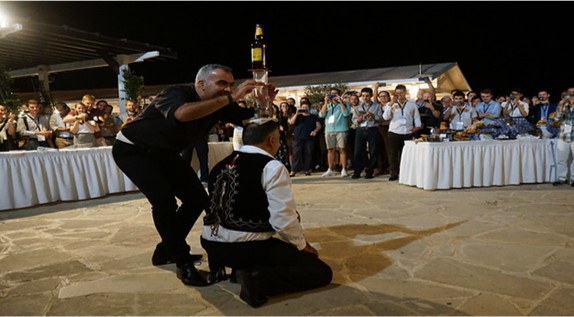
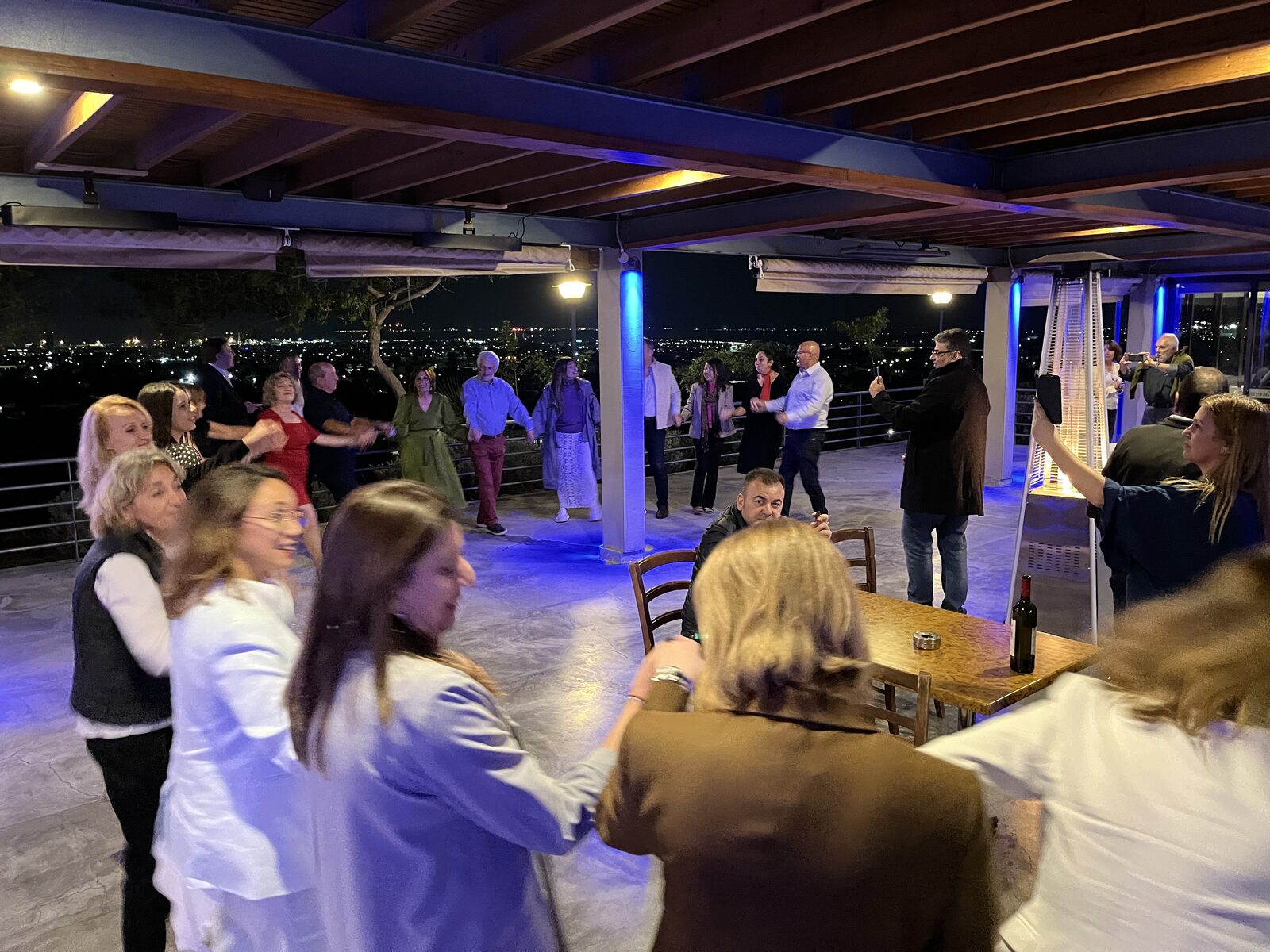
| 19:30–23:00 | Conference Dinner – Traditional Cypriot Evening Local tavern · Authentic Cypriot dishes complemented with local drinks, desserts, and traditional entertainment |
| 09:00–10:00 | Academic Keynote 3 – Do We Really Need All the Bits? Value-Driven Approximate Computing for AI Accelerators Prof. Freddy Gabbay · Hebrew University of Jerusalem, Israel · Plenary · Megaron AB · 60 min | ||
| 10:00–10:20 | Coffee Break + Poster Display 20 min · All 10 posters displayed simultaneously | ||
| 10:20–11:40 |
RS4 – Digital Design & EDA II
Megaron AB
Papers: 16 min talk + 4 min Q&A
Session Chair: Cédric Marchand · École Centrale de Lyon, France (to be confirmed)Tracks 3+4 · Timing, Async & FPGA · 3 papers · 80 min
|
RS8 – Communications, Sensing & Emerging Technologies
Megaron C
Papers: 16 min talk + 4 min Q&A
Session Chair: Luigi Capogrosso · IT:U, Austria (to be confirmed)Tracks 2+6+9 · 4 papers · 80 min
|
|
| 11:40–12:20 | Industrial Keynote 3 – Bridging the Gap Between Research and Industry Through Embedded Systems Odysseas Economides · HardwareX Engineering, Cyprus · Plenary · Megaron AB · 40 min | ||
| 12:20–13:20 | Lunch Break60 min | ||
| 13:20–14:50 |
SS 150b – Sustainable Intelligence at the Edge (Part 2)
Megaron AB
Papers: 16 min talk + 4 min Q&A
Session Chair(s): Cathal Hoare · Tiziana Margaria (organizers)Organizers: Cathal Hoare · Tiziana Margaria · 4 papers · 90 min
|
SS 16 – Design, Testing & Reliability of Memristive-based Compute-in-Memory Architectures
Megaron C
Papers: 16 min talk + 4 min Q&A
Session Chair(s): Surendra Hemaram · Anteneh Gebregiorgis (organizers)Organizers: Surendra Hemaram · Anteneh Gebregiorgis · 1 invited talk + 3 papers · 90 min
|
|
| 14:50–15:10 | Coffee Break20 min | ||
| 15:10–16:10 | Closing Ceremony & Awards Plenary · Megaron AB · Conference ends 16:10 |
Join us for two social gatherings during the conference — a great opportunity to connect with colleagues and peers outside of the technical sessions.
Date: Monday, 12 October · Time: 17:30–19:00 · Location: Venue hotel grounds (exact location may vary depending on weather)
The Welcome Reception is the first social gathering between all conference delegates and it will take place at the St. Raphael Resort. It will be a relaxing evening during which delegates will have the opportunity to talk to colleagues and peers, while enjoying local drinks and ample canapés, with a view of the calming waters of the Mediterranean Sea.


Date: Tuesday, 13 October · Departure: 17:15 from the Hotel Lobby (please meet at the Lobby at 17:00)
We will depart from St. Raphael Resort by air-conditioned buses with licensed tour guides for a walking tour (weather permitting) of the historical sites and landmarks in the centre of Limassol. We will then head to a local tavern for an authentic Cypriot meze dinner accompanied by local drinks and desserts and live traditional entertainment. Upon return, the buses will be stopping at all conference hotels.