VLSI-SoC 2026

34th IFIP/IEEE International Conference
on Very Large Scale Integration SoC
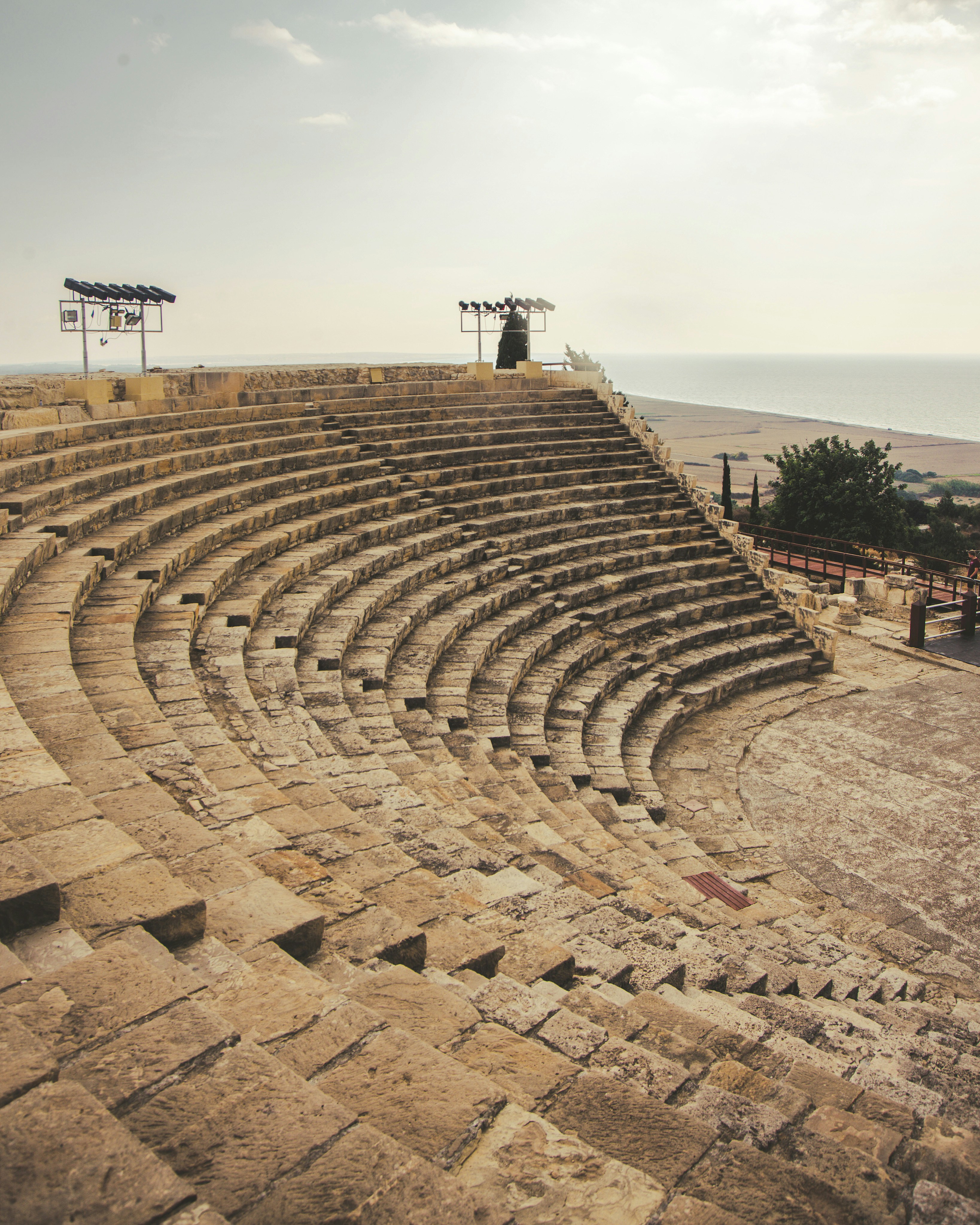
Limassol (Cyprus), 11-14 October, St. Raphael Resort.


 View the Conference Program

Special Sessions


Design, Testing, and Reliability of Memristive-based Compute-in-Memory Architectures

Organizers: Surendra Hemaram and Anteneh Gebregiorgis

Abstract: This special session explores emerging compute paradigms with a focus on memristive compute-in-memory architectures. It addresses key challenges in fault tolerance, device variability, hardware-software co-design, and post-manufacturing testing for reliable brain-inspired and AI computing systems.

Talks:

  • Emerging Compute Paradigms – Opportunities and Challenges — Norbert Wehn

Papers:

  • ECC-Assisted Fault Tolerance in Memristive Crossbar-based CIM Architectures: An Overview — Surendra Hemaram, Said Hamdioui and Anteneh Gebregiorgis
  • Variability Aware Neuro-Memristive Networks: Hardware Software Co-design Approaches — Aleena Kabeer, Darshitha Dinesh and Alex James
  • Testing RRAM-Based Brain-Inspired Architectures after Manufacturing: Challenges and Solutions — Leticia Maria Bolzani Poehls and Andre Lucas Chinazzo

Emerging & Reliable Computing for Scalable Intelligence

Organizer: Juergen Becker

Abstract: This session highlights emerging computing technologies and architectures for scalable and efficient intelligence. Topics span chiplet-based systems, service-oriented computing, efficient arithmetic for AI acceleration, and neural network inference on resource-constrained edge platforms.

Talks:

  • Emerging Technologies & The Chiplet Revolution — Guohao Dai
  • SoC – Service on a Chip — Markus Abel

Papers:

  • Evaluating Block Arithmetic Formats for Efficient AI Inference Hardware — Stefanos Christopoulos, Paul Genssler, Hussam Amrouch and Christian Sauer
  • Efficient Neural Network Inference on CPU-Centered Edge Device — Grace-Li Zhang

Sustainable Intelligence at the Edge: IoT, Embedded, and Cyber-Physical Systems for a Greener World

Organizers: Cathal Hoare and Tiziana Margaria

Abstract: This special session examines how embedded intelligence, IoT, and cyber-physical systems can enable more sustainable and resource-efficient computing. Contributions cover edge AI, industrial automation, federated systems, neuromorphic computing, efficient LLM inference, and intelligent decision-support applications.

Talks:

Papers:

  • TinySimpleNet: A SimpleNet for Unsupervised Industrial Anomaly Detection on Edge Devices — Luigi Capogrosso, Enrico Fraccaroli, Michele Magno and Franco Fummi
  • On the Deployment of Egocentric Pose Estimation Algorithms at the Edge — Ferdinando Pompanin, Enrico Martini, Franco Fummi and Nicola Bombieri
  • Sustainable SoftPLCs at the Edge: An Open-Source Path to Right-Sizing and Retrofitting Industrial Automation — Gioacchino Ivan Noto and Nicola Dall'Ora
  • LLM-Driven Optimization of Large Language Model Inference — Amir Aminifar
  • A Federated Cyber-Physical Edge Architecture for Smart Hospital Room Automation — Matteo Iervasi, Tawite Noe Marthe, Mascuud Mohamed Ali, Abdulaziz Abdulkadir Hassan and Florenc Demrozi
  • Toward a Unified Memristive Edge Platform for Sensing, Security, and Neuromorphic Computing — Heba Abunahla
  • Embedded Intelligence at the Edge: Recommender Systems, Efficient Simulation, and Operator-Centred Decision Support — Cathal Hoare and Tiziana Margaria

Edge AI for Smart Agriculture

Organizer: Theocharis Theocharides

Abstract: This session explores how Edge AI, embedded computing, and advanced sensing technologies can transform smart and precision agriculture. Topics include robotic and neuromorphic vision, low-power AI systems, precision monitoring, and on-device perception for efficient and sustainable agricultural applications.

Talks:

Papers:

  • Embedded Systems for Precision Agriculture Monitoring: An Electronics Designer's Perspective — Lorenzo Peppi, Alessandro Torrisi, Michele Gullino, Luigi Manfrini, Luisa Petti and Luca De Marchi
  • Neuromorphic Vision Technologies in Smart Agriculture: Challenges and Opportunities — Luca Peres and Davide Bertozzi
  • Edge AI for Smart and Precision Agriculture: An Overview of Robotic Vision for Field Perception and Decision Support — Theocharis Theocharides, Antonis Savva and Yiota Victoria Phakoukaki
  • Pollin8: Species-Level Pollinator and Pest Counting on a Milliwatt System-on-Chip — Denisa-Andreea Constantinescu, Philip Wiese, Mattia Consani, Victor Kartsch, Luca Benini and David Atienza

DfT, Reliability and Functional Safety for Edge AI SoCs

Organizers: Maksim Jenihhin and Matteo Sonza Reorda

Abstract: This special session addresses the growing need for dependable and functionally safe Edge AI systems. It brings together advances in design-for-test, runtime fault detection and correction, reliability assessment, and safety-oriented processor testing and hardening across the computing stack.

Talks:

  • Towards Dependable Edge AI: Reliability Assessment and Hardening Across the Compute Stack — Matteo Sonza Reorda

Papers:

  • DfT-Assisted Testing of Resistive Short Defects in SRAM-Based In-Memory Computing Architectures — Dimitrios Stylianos Lampridis, Yiorgos Tsiatouhas, Maria K. Michael and Theocharis Theocharides
  • NURSE: Syndrome-Guided Runtime Correction of Pipeline Interconnect Faults in RISC-V Processors — Ashwin Santhosh, Artur Jutman, Endri Kaja, Wolfgang Ecker and Maksim Jenihhin
  • Towards ISO 26262-compliant Vector Processors: Combining STLs and LBIST — Gustavo Vilar de Farias, Dwijesh Kurada, Sergiu-Mohamed Abed, Juan-David Guerrero-Balaguera, Josie Esteban Rodriguez Condia, Ahmet Cagri Bagbaba, Felipe Augusto da Silva and Matteo Sonza Reorda

Call for Special Sessions


The VLSI-SOC 2026 Organizing Committee invites proposals for Special Sessions to be held during the IFIP/IEEE International Conference on Very Large Scale Integration SoC (VLSI-SoC 2026) in Limassol, Cyprus from 11th October to 14th October 2026. Special sessions complement the regular technical program by highlighting new and emerging research topics or innovative applications of established approaches.


Suggested topics include, but are not limited to:


  • IoT, Embedded and Cyberphysical Systems: Architecture, design, and software
  • Hardware security
  • Machine learning for SoC design and for electronic design automation
  • Neuromorphic computing
  • Quantum computing


All papers will be subject to the same peer review process as for regular papers.

Special Session Chairs


Special Session Structure and Requirements


Special Session can be structured as:

  • One invited speaker (without paper) + three special session papers, or
  • Four special session papers

All participants (including the invited speaker) presenting in the Special Session must have a full registration.


The papers accepted in the special session will be included in the conference proceedings.


Papers from special sessions will be invited to submit an extended version to be included as chapters of a book to be published by Springer.


Special Session Proposals


Please submit proposals (2 pages) in PDF format to easychair VLSI-SOC 2026 track Special Session proposal . For information, email the Special Session Chairs theocharides.theocharis@ucy.ac.cy and mmichael@ucy.ac.cy putting in cc the Program Chairs florenc.demrozi@uis.no and pnikolaou1@uclan.ac.uk .
The proposal should include the following information:

  • Session Title, Session Abstract, Theme(s) & Topic Area(s)
  • Organizer information
  • Session Chair information
  • Speaker Paper/Presentation Titles and Abstracts
  • Intended audience

Important aspect in the evaluation of special session proposals will be the timeliness of the topic, quality/track record of the proposers and speakers, coherence of the session and expected value added to the overall technical program.